
Why Diet Matters for Long Term Health Benefits in Old Age
Food cannot stop ageing, but it can shape how ageing feels. A daily plate can support stronger bones, steadier energy, better digestion, sharper thinking, and improved recovery from illness. That is why diet matters so much in later life.
Old age often brings changes that make nutrition harder. Appetite may drop. Taste can change. Teeth or digestion may become sensitive. Some people manage diabetes, high blood pressure, heart disease, arthritis, or kidney concerns. Medicines can affect hunger, sleep, and nutrient absorption. On top of that, many older adults eat alone, which can make meals less regular.
The good news is simple: healthy eating in old age does not need fancy foods. A balanced Indian meal with dal, curd, vegetables, whole grains, nuts, fruits, and enough water can do a lot. The aim is not a strict diet. The aim is to eat in a way that supports independence, comfort, and quality of life for as long as possible.
This article is for general information only. Anyone with a medical condition, recent illness, swallowing difficulty, or a prescribed diet should speak with a qualified doctor or dietitian before making major changes.
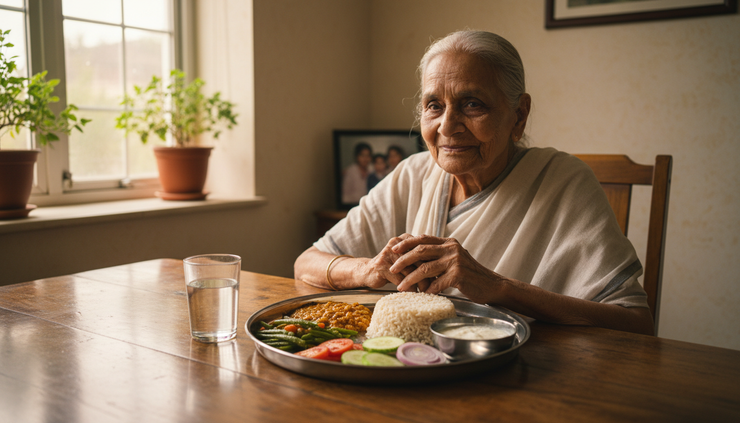
Diet becomes more important as the body changes
Ageing changes the way the body uses food. Muscle mass tends to reduce with age, especially when physical activity drops. Bones may become weaker. Digestion may slow down. Thirst signals can become less clear. The body may also need fewer calories than before, while needing good-quality nutrients just as much, or sometimes more.
This is why the quality of food matters. A small appetite filled with fried snacks, sweets, or refined flour may give calories, but it will not give enough protein, fibre, vitamins, or minerals. By contrast, a simple meal of dal, vegetables, chapati, curd, and fruit can provide a better mix of nutrients.
The link between Long term health, age, and daily food choices becomes clear when small habits are repeated for years. One meal will not decide health. A regular pattern will.
A helpful old-age plate often includes:
Protein Dal, chana, rajma, eggs, fish, chicken, paneer, curd, tofu, sprouts, or soy chunks.
Fibre-rich carbohydrates Millets, oats, brown rice, whole wheat roti, red rice, vegetables, and fruits.
Healthy fats Nuts, seeds, groundnut, sesame, mustard oil, or small amounts of ghee.
Micronutrients Green leafy vegetables, seasonal fruits, dairy or fortified foods, pulses, and varied vegetables.
Fluids Water, chaas, thin soups, coconut water when suitable, and unsweetened herbal drinks.
The best diet is not the most expensive one. It is the one a person can eat, digest, afford, and repeat.
Protein helps protect strength and independence
One of the most common nutrition gaps in old age is low protein intake. Many older adults eat soft, easy foods like rice, poha, upma, toast, or tea and biscuits. These may be comforting, but they often provide too little protein.
Protein helps maintain muscle. Muscle supports walking, balance, getting up from a chair, carrying groceries, and recovering after illness. When meals lack protein for a long time, weakness can build slowly. This can raise the risk of falls and reduce confidence in daily life.
A practical way to improve protein is to include one protein food at every meal.
For example:
Meal | Easy protein additions |
Breakfast | Curd, milk, sprouts, besan chilla, egg, paneer, peanuts |
Lunch | Dal, rajma, chole, fish, chicken, curd, tofu |
Evening snack | Roasted chana, makhana, nuts, buttermilk, boiled egg |
Dinner | Khichdi with dal, paneer bhurji, curd rice, sambar, soy chunks |
Protein needs vary. People with kidney disease or other medical conditions may need a specific plan. For many older adults, though, simply adding a little protein to each meal can make a noticeable difference over time.
Small swaps can help. Add dal to vegetable soup. Use besan instead of maida. Eat curd with rice. Add peanuts to poha. Choose idli with sambar instead of plain toast. These changes feel familiar, not forced.

Food affects bones, joints, and mobility
Strong bones and steady joints matter deeply in old age. A fall or fracture can change daily life for months. Diet alone cannot prevent every bone or joint problem, but it plays an important role along with safe movement, sunlight, sleep, and medical care.
Calcium, vitamin D, protein, magnesium, and other nutrients support bone health. In India, vitamin D deficiency is common even in sunny regions because many people spend most of the day indoors or keep covered outdoors. A doctor may suggest a blood test or supplement if needed.
Good food sources that support bones include:
Milk, curd, paneer, and other dairy foods
Ragi, sesame seeds, almonds, and leafy greens
Dal, beans, chana, and soy foods
Eggs and fish, where eaten
Fortified foods, when recommended
For joints, a balanced diet can help manage weight and reduce strain on knees and hips. Excess weight can make movement painful. Very low weight can also be risky because it may signal low muscle and weak reserves. The goal is a healthy, stable body weight, not extreme dieting.
For older adults with arthritis, soft cooked vegetables, dals, soups, fish, nuts, and seeds may be easier to eat and prepare. Deep-fried snacks and excess sugar may crowd out better foods. They can still appear occasionally, but they should not become the centre of daily eating.
A good diet does not promise miracle old age benifits, but it can support healthier movement, better strength, and more comfortable daily routines.
A heart-friendly diet starts with everyday choices
Heart disease, high blood pressure, and diabetes become more common with age. Food choices can support better control, especially when paired with medicines and regular check-ups.
A heart-friendly Indian diet does not mean bland food. It means using flavour wisely.
Choose more:
Vegetables cooked with less oil
Whole grains such as atta roti, millets, oats, or brown rice
Pulses and legumes
Seasonal fruits in sensible portions
Curd, buttermilk, or low-sugar dairy options
Nuts and seeds in small amounts
Home-cooked meals most days
Limit more often:
Excess salt, pickle, papad, namkeen, and packaged snacks
Sugary tea, sweets, biscuits, and sweet drinks
Deep-fried foods
Refined flour foods such as maida-based snacks
Large portions of white rice without enough dal or vegetables
Salt deserves special attention. Many Indian meals contain salt from several places: cooking salt, pickle, papad, chutney, packaged masala, namkeen, and bakery foods. Reducing salt gradually works better than sudden strict cutting. Taste buds can adjust with time.
Use flavour from:
Lemon
Ginger
Garlic
Jeera
Ajwain
Curry leaves
Coriander
Mint
Mustard seeds
Roasted spices
For diabetes, meal timing and portion balance matter. A plate with only rice or only upma may raise blood sugar faster. Pairing carbohydrates with dal, curd, vegetables, nuts, or eggs can slow digestion and improve fullness. A doctor or dietitian can help adjust meals to medicines, especially insulin or diabetes tablets.

Digestion and hydration need gentle daily support
Many older adults deal with constipation, acidity, bloating, or reduced appetite. These problems can make eating stressful. A few steady habits can help.
Fibre supports bowel movement and gut health. It comes from vegetables, fruits, whole grains, dals, beans, seeds, and nuts. Fibre works best with enough fluid. If water intake stays low, a sudden rise in fibre may worsen constipation.
Build fibre slowly. Add one extra vegetable serving. Choose fruit instead of biscuits sometimes. Use dal in dinner. Try oats, daliya, ragi, or millets if they suit digestion. Soaked raisins, papaya, guava, and cooked greens help some people, though tolerance varies.
Hydration also needs attention. Older adults may not feel thirsty even when the body needs fluids. Some avoid water to reduce night-time urination. That can backfire by causing constipation, dizziness, or urinary discomfort.
Simple hydration habits include:
Keep a water bottle nearby during the day.
Drink small amounts often instead of large amounts at once.
Include chaas, thin dal, soup, or lemon water without excess sugar.
Reduce fluids close to bedtime if night urination is a problem, but do not skip fluids all day.
Speak to a doctor if there is heart failure, kidney disease, swelling, or a fluid restriction.
Chewing problems also affect diet. Missing teeth, loose dentures, or mouth pain can push a person towards tea, bread, rice, and soft sweets. Softer healthy foods can solve this.
Good soft options include dal khichdi, curd rice, vegetable daliya, mashed sweet potato, soft idli with sambar, paneer bhurji, scrambled egg, stewed fruit, thick soups, and well-cooked vegetables.
Diet can support memory, mood, and sleep
The brain also depends on nutrition. Research suggests that diets rich in vegetables, fruits, whole grains, nuts, pulses, fish where eaten, and healthy fats may support brain health as people age. No food can guarantee memory protection, but a balanced pattern gives the brain steady fuel and key nutrients.
Long gaps between meals may cause irritability, weakness, or light-headedness. Too much sugar may give quick energy followed by a crash. Too much caffeine late in the day can affect sleep. Poor sleep can then affect appetite and mood the next day.
A steady routine helps:
Eat meals at regular times.
Include protein in breakfast.
Keep dinner lighter if digestion is slow.
Avoid very spicy or heavy food late at night if it causes acidity.
Limit tea and coffee in the evening.
Include calming foods like warm milk, light khichdi, or soup if they suit the person.
Social connection matters too. Eating with family or neighbours can improve appetite. A simple shared meal may do more than a perfect diet eaten alone. Food carries memory, comfort, and identity. Healthy changes work best when they respect that.
Practical ways to improve diet without making it difficult
A healthy old-age diet should feel doable. Big changes often fail because they demand too much. Small changes repeated daily work better.
Start with one meal. Breakfast is a good place. Replace tea and biscuits with idli and sambar, poha with peanuts, oats with milk and nuts, or besan chilla with curd. Once that feels normal, improve lunch or dinner.
Use the plate method for main meals:
Half the plate with vegetables or salad, as tolerated
One quarter with protein such as dal, paneer, curd, eggs, fish, chicken, chana, or rajma
One quarter with rice, roti, millet, or another grain
A small portion of healthy fat through cooking oil, nuts, or seeds
This method does not require calorie counting. It creates balance by sight.
Plan for easy days. Keep simple staples ready: roasted chana, curd, boiled eggs, sprouts, cooked dal, frozen peas, cut vegetables, fruit, and homemade khichdi mix. When energy is low, these prevent skipped meals.
Family members and caregivers can help by making healthy food easy to reach. Keep fruit washed. Serve water regularly. Offer smaller meals if appetite is low. Avoid forcing large portions, as pressure can reduce appetite further.
Watch for warning signs. Seek medical advice if an older adult has sudden weight loss, poor appetite for many days, choking while eating, repeated vomiting, swelling, confusion, severe constipation, or very low energy. These may need medical care, not just diet changes.

A simple daily eating pattern for healthy ageing
There is no single perfect menu. Food habits vary across India, and medical needs differ. Still, the pattern below shows how ordinary meals can support long-term health in old age.
Time | Example meal |
Morning | Warm water, followed by idli with sambar or besan chilla with curd |
Mid-morning | Seasonal fruit, or buttermilk if suitable |
Lunch | Roti or rice, dal, cooked vegetables, curd, and salad if tolerated |
Evening | Roasted chana, makhana, nuts, sprouts, or milk |
Dinner | Light khichdi with vegetables, soup with paneer, or soft roti with dal |
Bedtime if needed | Warm milk or a small light snack, only if it suits digestion |
This approach gives regular fuel without making meals too heavy. It also leaves room for culture, taste, and personal preference.
Diet in old age is not about chasing youth. It is about supporting the body that has carried a person through life. Good food can help preserve strength, reduce avoidable discomfort, support medical treatment, and make daily living easier.
The best next step is simple: improve the next plate. Add one protein food. Add one vegetable. Drink a glass of water. Repeat tomorrow. Over months and years, those small choices become a quiet form of care.


Comments